Color Psychology in Digital Casino Interfaces and Its Role in Sustaining Activity Across Game Varieties
Freya Lorenz · Aug 21, 2026
Color Psychology in Digital Casino Interfaces and Its Role in Sustaining Activity Across Game Varieties
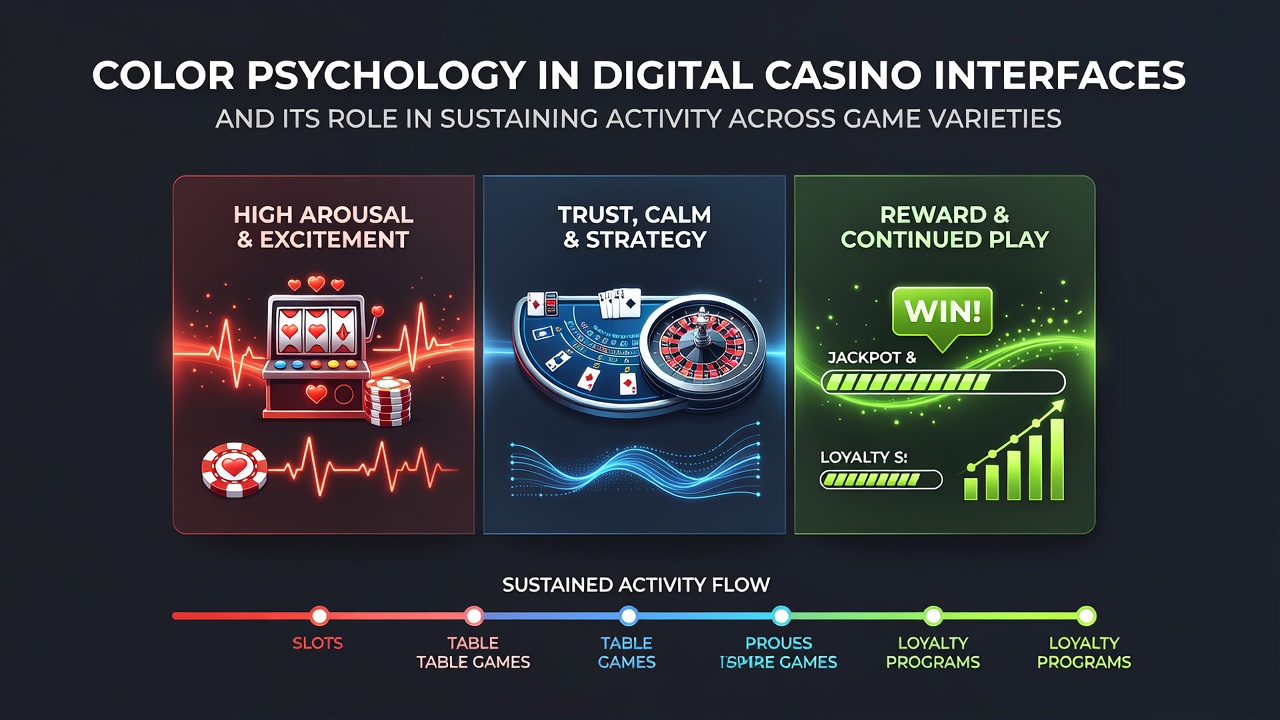
Digital casino platforms apply specific color schemes to guide user behavior, and researchers have tracked how these choices influence session duration across different game types since the expansion of online gambling platforms in the early 2010s. Data from multiple studies show that color selections correlate with player retention rates, particularly when interfaces adapt hues to match the pace and risk profile of slots, blackjack, roulette, and live dealer environments. Observers note that platforms often deploy warm tones like reds and oranges in high-volatility sections to heighten arousal, while cooler blues and greens appear in areas designed for sustained concentration during strategy-based play.
Core Principles Behind Color Selection in Casino Design
Color psychology draws from established findings in cognitive research, where certain wavelengths trigger measurable physiological responses such as increased heart rate or focused attention. Those who study interface design report that red hues activate urgency signals in the brain, a pattern documented across retail and entertainment sectors, and casino developers apply similar mappings when constructing slot lobbies that encourage rapid spins. Meanwhile, blue tones link to perceptions of reliability, which explains their frequent use in deposit and account management screens that require trust during financial transactions. Studies conducted by academic teams in North America and Europe have quantified these effects through eye-tracking experiments, revealing that players spend longer periods on pages where color saturation aligns with the emotional demands of the game category.
Application Across Slot Machine Interfaces
Slot games rely heavily on vibrant, contrasting palettes that combine gold, purple, and electric blue to create visual pop and maintain engagement during bonus rounds. Research indicates that these high-saturation combinations sustain activity by reducing the perception of time passing, a factor measured in controlled trials where participants extended play sessions by an average of 12 to 18 minutes when interfaces used dynamic color shifts tied to win animations. Platforms serving markets in the United States and Australia have incorporated these findings into mobile-optimized designs, where color gradients change based on bet size and volatility settings. Data collected through player analytics platforms show higher repeat login rates on slots that maintain consistent warm-to-cool transitions between base game and feature stages.
Color Strategies in Table Games and Live Dealer Sections
Blackjack and roulette interfaces typically favor darker backgrounds with accent colors in green and gold to evoke traditional felt tables while guiding attention to betting areas. Those who analyze user flow data note that this approach supports longer decision-making periods without inducing fatigue, particularly when live dealer streams integrate neutral tones that keep focus on the human element rather than the surrounding digital frame. A report issued by the Canadian Centre for Addiction and Mental Health examined interface variants and found that balanced color usage in table game lobbies correlated with steadier participation across multi-hand sessions. Live dealer environments further layer these elements by using warm lighting overlays during peak hours, a technique that aligns with observed increases in table occupancy during evening windows in August 2026 across major operators.
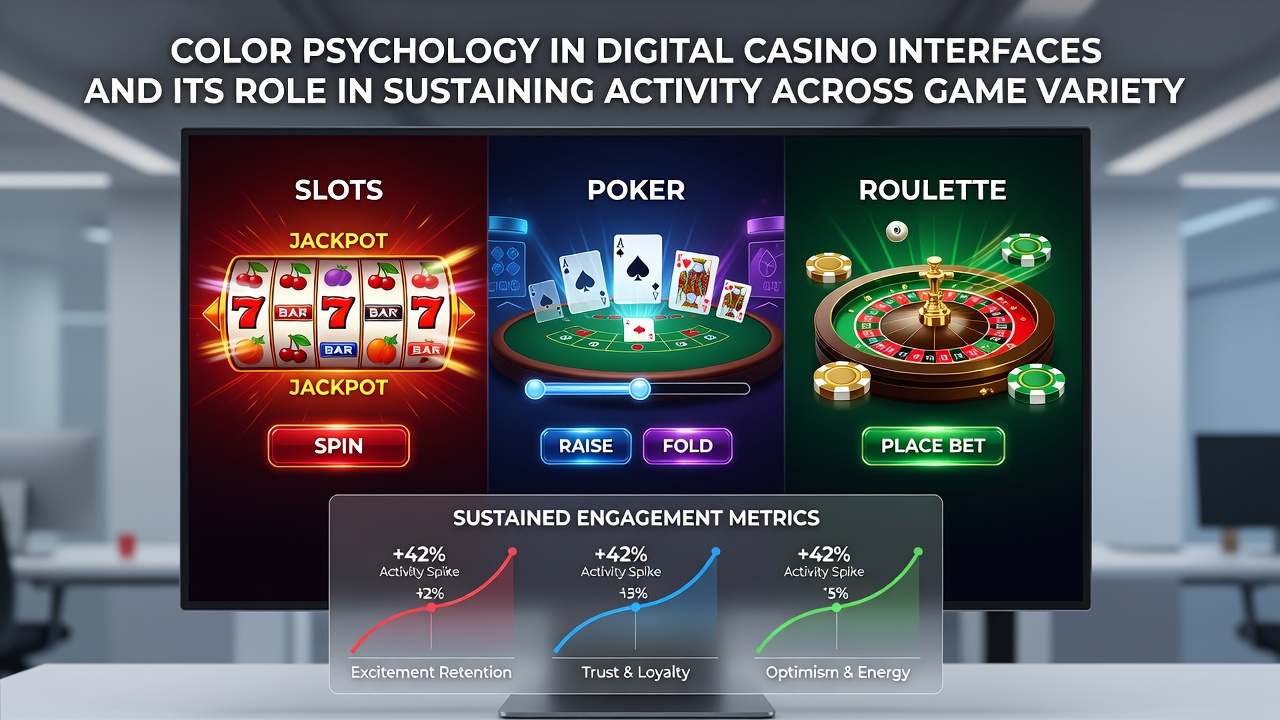
Experts tracking cross-game activity have observed that players who move between slots and table games respond to seamless color palette handoffs, where the interface maintains a unified yet differentiated scheme. This continuity appears in retention metrics released by the American Gaming Association, which link consistent visual language to reduced bounce rates when users switch categories mid-session. Platforms that fail to coordinate these transitions often record sharper drops in activity after the first 30 minutes of play.
Regional Regulatory Context and Industry Data Trends
Government bodies in various jurisdictions have begun reviewing how interface elements, including color, factor into responsible gaming tools. The Australian Communications and Media Authority has referenced color contrast standards in recent accessibility guidelines for digital gambling products, requiring sufficient differentiation to support users with visual processing differences. In parallel, industry reports from the European Gaming and Betting Association highlight that operators using data-driven color adjustments report measurable gains in session completion rates across regulated markets. Figures compiled through 2025 and into 2026 indicate that platforms incorporating these adjustments maintain higher average revenue per user in both slots and live table segments compared with static designs.
One study from researchers at the University of Sydney tracked color modifications over six months and documented a 7 percent lift in cross-game transitions when interfaces employed adaptive palettes that dimmed during extended play periods. Such adjustments aim to balance stimulation wth periods of lower intensity, supporting continued activity without abrupt exits.
Conclusion
Color psychology remains a central component of digital casino interface development, with documented effects on activity patterns across game varieties. Evidence from academic institutions, regulatory reviews, and industry analytics continues to shape how operators select and refine palettes, and ongoing data collection through 2026 will likely refine these approaches further as platforms expand across mobile and desktop environments.