Demographic Shifts in Participation Within Digital Entertainment Venues Specializing in Chance-Based Machines, Simulated Dealer Interactions, and Event-Based Wagering
Freya Lorenz · Nov 6, 2026

Demographic Shifts in Participation Within Digital Entertainment Venues Specializing in Chance-Based Machines, Simulated Dealer Interactions, and Event-Based Wagering
Data from multiple regulatory bodies and industry reports reveal steady changes in who engages with online platforms offering slot machines, live dealer games, and sports wagering as of November 2026. Researchers at academic institutions and trade associations track these patterns through registration data, transaction volumes, and survey responses collected across North America, Europe, and Asia-Pacific markets.
Age Group Participation Patterns
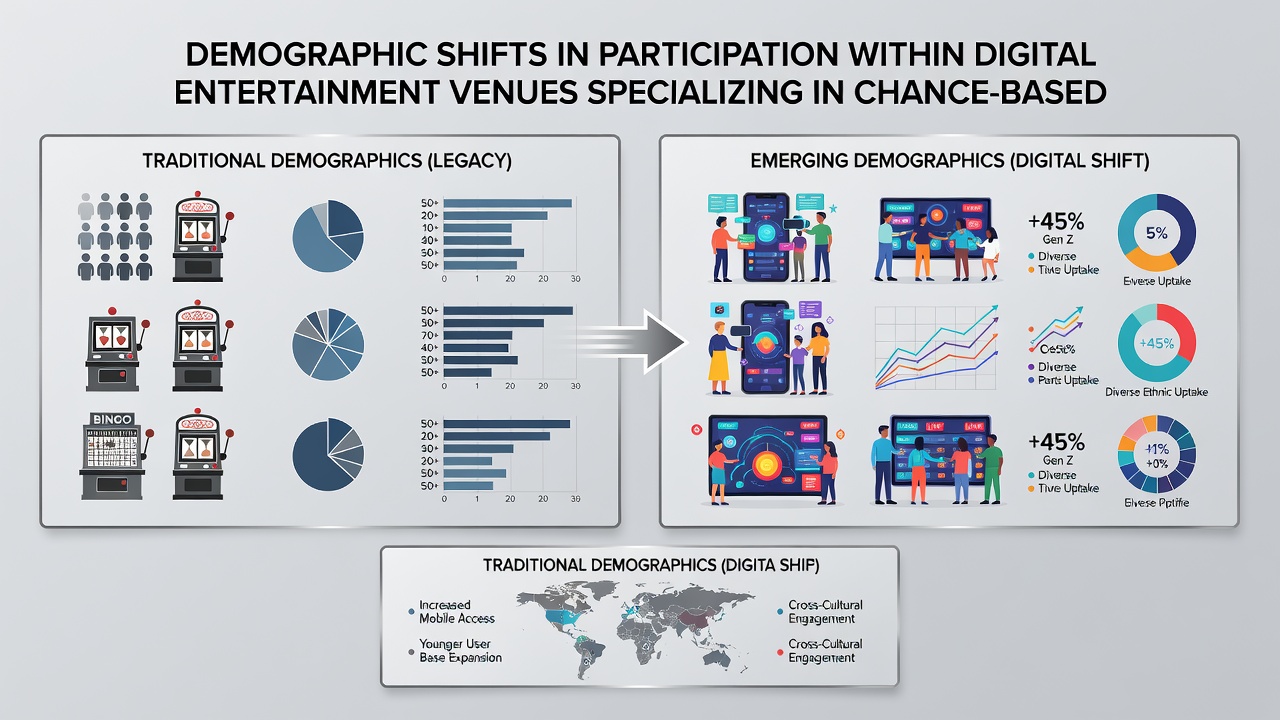
Younger adults between 18 and 34 now account for larger shares of activity in event-based wagering compared with earlier periods, while users aged 45 and older continue to dominate time spent on chance-based machines. Studies conducted by university research teams show that mobile applications and in-play betting features draw this younger cohort, whereas progressive jackpot structures and familiar reel formats retain older participants who began with land-based venues. Observers note that hybrid promotions linking sports forecasts to reel accumulations appear to bridge these age segments without altering core preferences.
Figures released by the American Gaming Association indicate that sports betting accounts grew 18 percent among the 25-to-34 demographic between 2024 and 2026, whereas slot participation in the same platforms rose more slowly. In contrast, data compiled by the Australian Gambling Research Centre highlights stable engagement from players over 50 who favor simulated dealer interactions during evening hours. These patterns hold across licensed operators that report monthly activity metrics to state and provincial authorities.
Gender Distribution Changes
Women represent an increasing portion of users on platforms featuring simulated dealer interactions, with participation rates climbing from 32 percent in 2022 to 41 percent in late 2026 according to aggregated operator reports. Men still lead in event-based wagering volumes, yet the gap narrows where operators introduce table game variants with lower minimum stakes. Industry organizations such as the European Gaming and Betting Association publish quarterly summaries showing that female users spend comparable session lengths on live dealer blackjack and roulette once they enter these environments.
Payment method preferences also differ by gender in recent analyses, with female participants more frequently selecting digital wallet options that streamline deposits into reward-linked accounts. Those who monitor retention metrics note that variety in transaction channels correlates with longer engagement across both reel-based and table simulation categories. Regulatory filings from Canadian provincial bodies confirm these trends without attributing causation to any single factor.
Geographic and Regional Variations
Participation growth in Asia-Pacific markets outpaces North American figures for chance-based machines, driven by expanded mobile access and localized payment integrations. European operators report higher uptake of event-based wagering in countries with mature licensing frameworks, while simulated dealer traffic remains consistent across time zones. Research papers from institutions in Singapore and Australia document how regulatory clarity influences cross-border user flows, particularly when operators offer multilingual interfaces and region-specific promotions.
November 2026 licensing updates in several U.S. states coincided with measurable upticks in new registrations from previously underrepresented urban and suburban zip codes. Government agencies in those jurisdictions publish anonymized demographic summaries that researchers cross-reference with global datasets to identify migration patterns between platforms. These shifts occur alongside broader adoption of responsible gaming tools that track play duration and deposit limits.
Technology and Access Influences
Smartphone penetration and improved network speeds continue to shape how different groups interact with these venues. Data indicates that users in rural areas show stronger preference for asynchronous slot sessions, whereas urban cohorts engage more with live dealer streams that require stable connections. Industry reports link faster verification processes to higher conversion rates across all age and gender categories, especially when combined with layered reward structures.
Payment-support networks that facilitate rapid transfers between accounts also affect retention, according to analyses from the National Council on Problem Gambling and similar bodies in other regions. Observers track how these systems intersect with demographic variables such as employment status and disposable income levels reported in voluntary surveys. The resulting datasets help operators adjust interface designs without altering underlying game mathematics.
Conclusion
Comprehensive tracking by regulators, academic researchers, and trade groups documents ongoing demographic evolution within digital platforms centered on slots, live dealer experiences, and sports betting. These measurable changes reflect broader technological access, licensing developments, and user interface refinements observed through November 2026. Continued collection of anonymized participation data will allow stakeholders to monitor future trajectories across global markets.